Blockchain Security Risks and Rewards: Must-Have Insights for Best Protection
Blockchain technology has rapidly evolved from a niche concept to a transformative force across many industries. While its decentralized nature offers groundbreaking opportunities, it also introduces unique challenges. Understanding blockchain security risks and blockchain security rewards is crucial for individuals and organizations aiming to leverage this technology safely and effectively. This article explores these risks and rewards in detail, providing essential insights to help you safeguard your blockchain assets and reap the maximum benefits.
Understanding Blockchain Security Risks
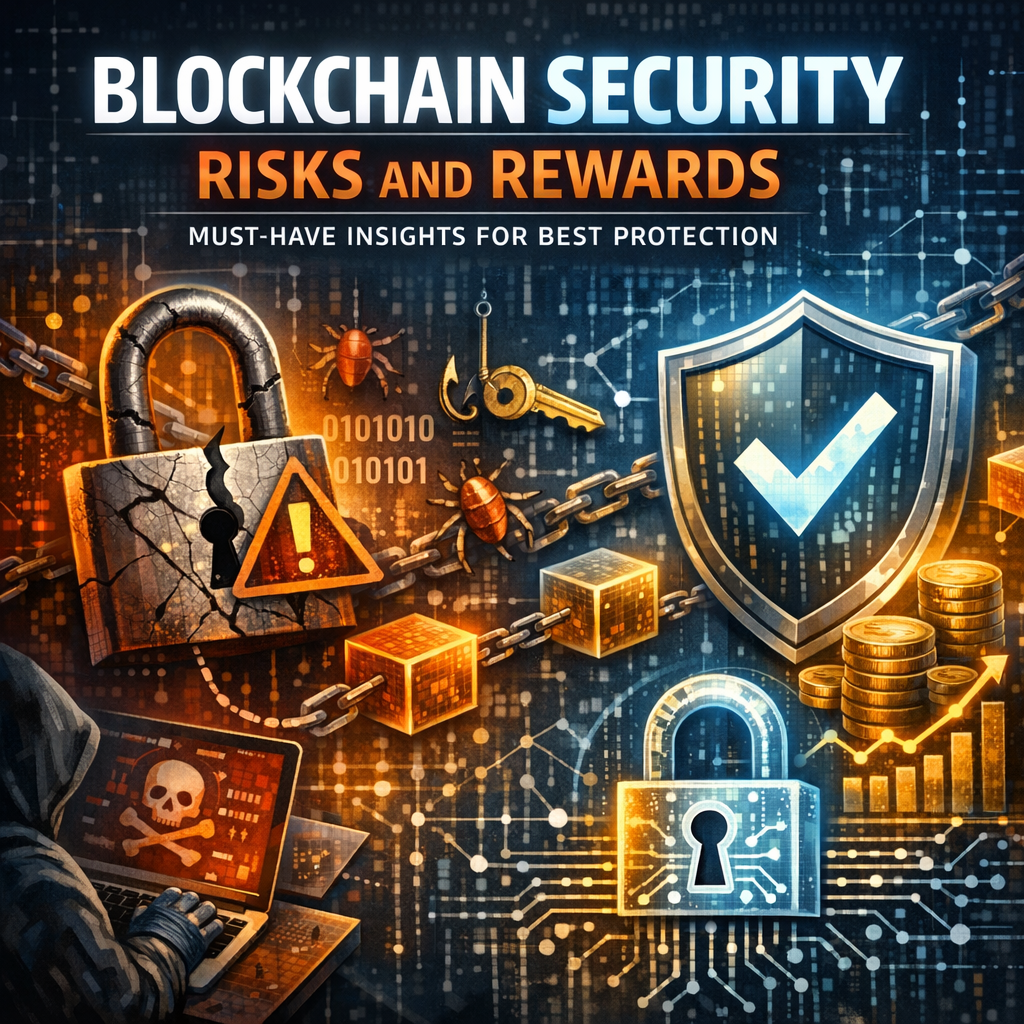
The fundamental appeal of blockchain lies in decentralization, transparency, and immutability. However, these very characteristics do not make it immune to threats. Here are some of the most critical blockchain security risks you should be aware of:
1. Smart Contract Vulnerabilities
Smart contracts automate transactions on a blockchain without intermediaries, but their code can contain bugs or loopholes. Vulnerabilities like reentrancy attacks, integer overflow, or flawed logic can be exploited by hackers, leading to significant financial losses. Since smart contracts are immutable once deployed, fixing vulnerabilities can be challenging.
2. 51% Attacks
In certain blockchain consensus mechanisms, such as Proof of Work, if a single entity gains control of more than 50% of the network’s mining power, they can manipulate the blockchain, double-spend tokens, or block certain transactions. Although difficult and costly to execute in large, well-established networks like Bitcoin, 51% attacks have impacted smaller blockchain projects.
3. Private Key Theft
Blockchain ownership relies heavily on private keys. If a private key is lost or stolen, the assets linked to it are essentially inaccessible or vulnerable to theft. Phishing, malware, or social engineering attacks are common ways hackers try to obtain these keys. Unlike traditional systems, there are rarely mechanisms to recover stolen blockchain assets.
4. Phishing and Social Engineering
Users of blockchain platforms can be targeted by phishing attempts to trick them into revealing sensitive data or transferring funds. Social engineering attacks may also manipulate employees within blockchain companies to gain unauthorized access to systems or wallets.
5. Regulatory and Compliance Risks
Blockchain’s regulatory environment is still evolving. Non-compliance with emerging regulations can result in legal risks and penalties. This is particularly significant for platforms that handle personal data, money laundering concerns, or cross-border transactions.
Blockchain Security Rewards: Why Secure Your Assets?
Despite the risks, blockchain technology brings considerable rewards when properly secured. Here’s why investing in blockchain security is indispensable:
1. Immutable and Transparent Ledger
One of the foremost security advantages is the blockchain’s immutable ledger. Once recorded, transactions cannot easily be altered or deleted, which enhances data integrity and trust. Businesses can confidently leverage this feature for audits, supply chain management, and more.
2. Decentralization Eliminates Single Points of Failure
Traditional databases have centralized points vulnerable to hacking or failure. Blockchain’s distributed network structure significantly reduces this risk, making systems more resilient to attacks and outages.
3. Increased Trust and Verification
Blockchain enables peer-to-peer verification without intermediaries. Ensuring the security of this process encourages widespread adoption by minimizing fraud and enhancing transparency in industries like finance, healthcare, and real estate.
4. Enhanced Privacy and Control
Properly implemented blockchain solutions give users more control over their data and transactions. For example, cryptographic techniques can provide anonymity and selective disclosure, enhancing privacy when needed.
5. New Opportunities for Secure Innovation
By harnessing blockchain security rewards, organizations can innovate rapidly in sectors like decentralized finance (DeFi), digital identity, and supply chain tracking, creating new business models that were previously impossible.
Best Practices for Navigating Blockchain Security Risks and Reaping Rewards
To maximize benefits while minimizing risks, it’s essential to adopt effective security practices tailored to blockchain environments.
Conduct Thorough Smart Contract Audits
Before deploying smart contracts, have them rigorously audited by security experts. Use automated testing tools and formal verification techniques where possible to identify vulnerabilities.
Use Hardware Wallets and Multi-Factor Authentication
Secure private keys by storing them in hardware wallets rather than software wallets, and require multi-factor authentication for wallet access to reduce chances of theft.
Educate Users on Phishing and Scams
Regularly educate users about common phishing tactics and signs of social engineering. Encourage prudent practices like verifying URLs, avoiding unsolicited links, and double-checking transaction details.
Monitor Network Activity and Consensus Integrity
Keep track of network health to detect unusual mining activity or consensus disruptions that might indicate a 51% attack attempt.
Stay Updated on Regulatory Changes
Maintain compliance by working with legal advisors knowledgeable in blockchain regulation. Implement policies and procedures that adapt to new regulatory requirements promptly.
Conclusion
Blockchain technology holds tremendous promise, but with its immense potential come significant risks that must be addressed strategically. By understanding blockchain security risks such as smart contract exploits, private key theft, and 51% attacks, and capitalizing on blockchain security rewards like decentralization, transparency, and enhanced privacy, stakeholders can navigate this landscape successfully. Implementing best security practices will ensure you protect your assets and position yourself to unlock the full potential of blockchain innovation.