Crypto Scams Explained: Must-Have Basics for Safe Investing
In the fast-evolving world of cryptocurrencies, understanding crypto scams explained is crucial for anyone looking to invest safely. As digital currencies gain popularity, scammers become increasingly sophisticated in their methods, targeting both newcomers and seasoned investors. Without a clear grasp of the basics, you risk falling victim to schemes that can result in significant financial loss. This article breaks down the essential crypto scams basics and provides you with practical tips to secure your investments.
What Are Crypto Scams?
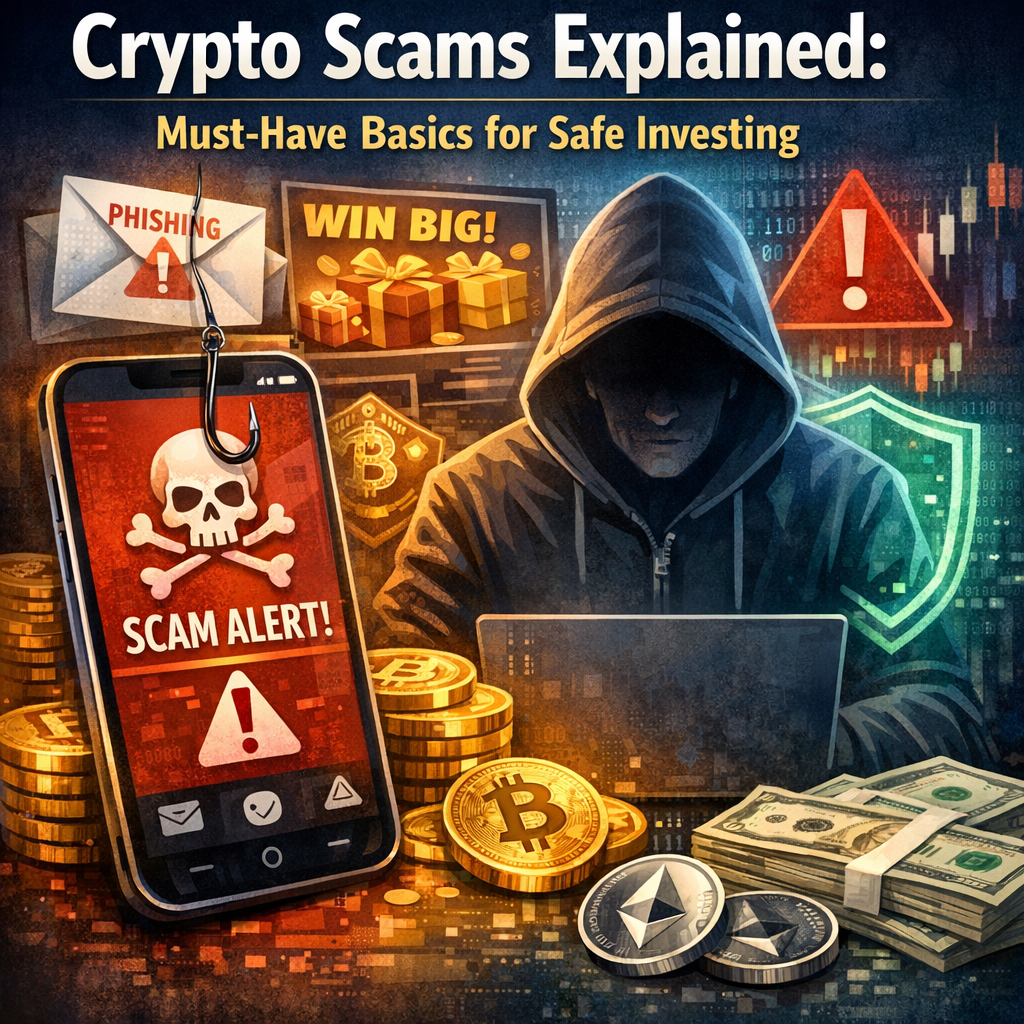
Crypto scams are fraudulent schemes that leverage the decentralized and often anonymous nature of cryptocurrency transactions to take advantage of individuals. These scams exploit the lack of regulation, the hype around quick profits, and sometimes the technical complexity of digital currencies.
Common types of scams include fake initial coin offerings (ICOs), phishing attacks, Ponzi schemes, pump-and-dump tactics, and fake wallets or exchanges. Each scam has distinct characteristics but shares the common goal of deceiving investors into sending money or sharing private information.
Understanding Crypto Scams Explained: Common Types to Watch For
1. Fake Initial Coin Offerings (ICOs)
ICOs are fundraising mechanisms where new cryptocurrencies are sold to investors. Scammers create fake ICOs, promising astonishing returns with little to no risk. They may use flashy websites, endorsements, and whitepapers to look legitimate. After collecting funds, the scammers disappear, leaving investors empty-handed.
2. Phishing Attacks
Phishing remains one of the most common tricks in the crypto world. Here, scammers impersonate legitimate crypto exchanges, wallet services, or even individuals via emails, websites, or social media. Their goal is to steal private keys, passwords, or recovery phrases, allowing them unauthorized access to your digital assets.
3. Ponzi and Hybrid Schemes
In a Ponzi scheme, scammers recruit investors with promises of high returns generated from earlier investors’ funds. These schemes thrive on continuous inflows, collapsing when new investors dwindle. Hybrid schemes combine Ponzi tactics with other fraudulent activities, making them harder to detect.
4. Pump-and-Dump Groups
Pump-and-dump schemes involve artificially inflating the price of a low-value cryptocurrency through misleading hype. Once a significant price increase occurs, scammers sell off their holdings at a profit, causing the price to crash. Unsuspecting investors are left with worthless coins.
5. Fake Wallets and Exchanges
Scammers may launch counterfeit wallets or cryptocurrency exchanges that mimic legitimate platforms. Once a user downloads or signs up, the scammer gains access to their funds or sensitive data.
Crypto Scams Basics: How to Spot and Avoid Fraudulent Activities
Research Thoroughly
Before investing in any cryptocurrency, a comprehensive background check is essential. Look for credible whitepapers, team credentials, roadmap clarity, and community feedback on platforms like Reddit and Twitter. Genuine projects often have active engagement and transparent communication.
Verify Website Authenticity
Be cautious of URLs and web addresses. Phishing websites often have slight misspellings or use subdomains to appear legitimate. Always access exchanges and wallets directly rather than through links from unsolicited emails or messages.
Protect Your Private Keys
Your private key or seed phrase is the gateway to your crypto. Never share it with anyone and avoid storing it digitally in unsecured formats. Hardware wallets are highly recommended for added security.
Use Trusted Exchanges and Wallets
Stick to well-established exchanges and wallets with solid reputations and extensive user bases. They often have more stringent security protocols and customer support options.
Be Wary of Unrealistic Promises
If an investment promises guaranteed high returns with no risk, it’s likely too good to be true. Scammers depend on greed and impatience, so maintaining a skeptical mindset is essential.
Enable Two-Factor Authentication (2FA)
Enable 2FA wherever possible to add an extra layer of security. This simple step can prevent unauthorized access even if your password is compromised.
What to Do If You Suspect a Crypto Scam
If you think you have encountered a scam, act immediately. Report it to the platform involved, use resources like the Federal Trade Commission (FTC) or equivalent authorities in your country, and alert crypto communities to prevent others from becoming victims. In some cases, stopping transactions quickly can limit damage.
Final Thoughts
Navigating the crypto landscape requires understanding crypto scams explained and applying crypto scams basics consistently. Scams remain a significant threat, but with vigilance, informed decision-making, and reliable security measures, you can protect your investments and confidently participate in the promising world of cryptocurrencies. Remember, the best defense against fraud is knowledge combined with cautious action. Stay informed, stay secure.